
Owning a home is rewarding in all sorts of ways, but it comes with a particular kind of mental load that nobody really warns you about. It’s not just the maintenance. It’s the constant low-level awareness that something might need attention, combined with the occasional sharp panic when something does. And underneath both of those is the recurring question: who do I call for this?
Some jobs are obvious. A leaking tap, a broken boiler, a fence blown down in a storm. But plenty of situations fall into a greyer area, where homeowners aren’t quite sure whether they need a specialist, whether it’s urgent, or whether they could handle it themselves without making things considerably worse.
When the Structure Needs Proper Support
Home renovation ambitions have grown considerably in recent years. Open-plan living, knocked-through ground floors, larger kitchen extensions, rooms that feel genuinely connected to the garden. These are all achievable, but many of them involve removing or altering walls that are doing structural work, and that’s where the project crosses into territory that needs specialist knowledge and, in most cases, specialist materials.
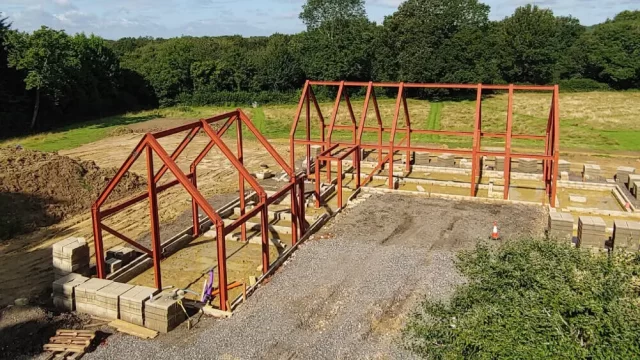
Structural steelwork is what makes many of these transformations possible. When a load-bearing wall comes down, something has to carry the weight it was taking. Steel beams, specified correctly and installed properly, transfer that load to the points in the building that can handle it. Get the specification wrong or cut corners on the installation, and the consequences range from deflection and cracking over time to something far more serious. A structural engineer calculates what’s needed, and a steel fabricator supplies it to those exact requirements. For homeowners planning significant layout changes, bringing both in early, before anything comes down, is simply the right way to approach it.
When a Tree Becomes a Risk Rather Than a Feature
Trees are one of the things that make a garden feel established and genuinely beautiful. They also grow, sometimes in directions that create problems: branches extending over a roof, roots encroaching on foundations or drainage, deadwood that poses a risk in high winds, or a tree that has outgrown the space it was planted in and is now shading out everything around it.
A qualified tree surgeon Winchester (and throughout Hampshire more broadly) brings the knowledge to assess a tree properly and advise on the best course of action, whether that’s pruning to improve shape and safety, crown reduction to manage size while preserving the tree’s health, or, where necessary, full removal and stump grinding. This is not work for a general gardener with a chainsaw. Trees are unpredictable, the work is carried out at height with heavy machinery, and poorly executed pruning can cause lasting damage to a tree or create new hazards where there weren’t any before. A properly qualified arborist is also able to advise on any preservation orders that might affect what can legally be done to a tree, which is something homeowners in older areas or conservation zones sometimes discover only when it’s too late.
A Mistake at the Pump That Needs Immediate Action
Most drivers know, in a vague way, that putting the wrong fuel in a car is bad. Fewer know exactly how bad, or how quickly the window for limiting the damage closes. Putting petrol into a diesel engine is the most common version of this mistake, and the damage it can cause to fuel pumps, injectors, and other components escalates significantly the moment the engine is started, and the contaminated fuel begins to circulate.
If you’ve put the wrong petrol in car, the single most important thing is not to start the engine, or to stop it immediately if it’s already running. From there, a specialist fuel drain service can remove the contaminated fuel, flush the system, and refill with the correct fuel, often getting the car running again with no lasting damage. These services operate nationally and can reach most locations within an hour or two. The cost is real but manageable. The cost of driving on contaminated fuel is considerably higher, and sometimes terminal for the engine.