
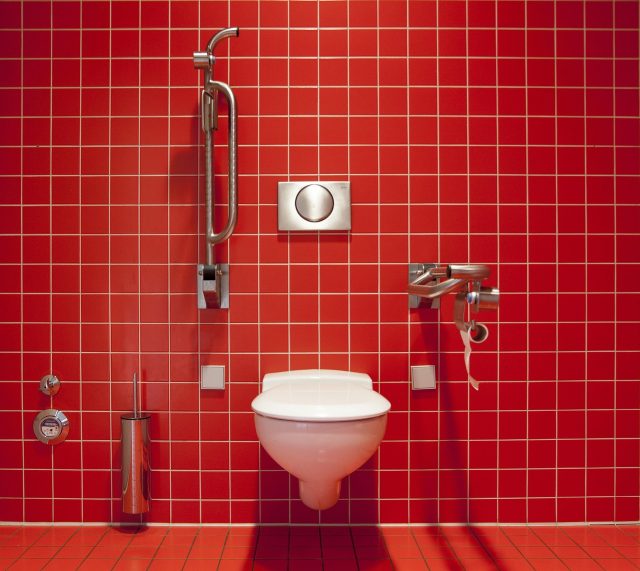
True safety is rarely shouted; it is engineered into the background. In the world of bathroom renovation, a significant shift is underway; away from bolt-on solutions and towards integrated, structural safety. Gone are the days of retrofitting ugly plastic aids. Today’s top installers are embedding protection directly into the fabric of the building, creating spaces that are robust enough for care needs but sleek enough for a showroom.
There is a quiet revolution happening in home design for older people, and it is reshaping the interiors of modern homes. For decades, the phrase “accessible bathroom” conjured a specific, unappealing image: clinical white grab rails bolted into tiles, plastic fold-down seats that stained easily, and hospital-grade vinyl flooring that smelled of rubber. These spaces were safe, certainly, but they came at a heavy cost. They stripped the family home of its dignity, marking a transition in life with a stark, institutional aesthetic.
In 2026, that binary choice between “safe” and “stylish” is officially gone. Driven by advancements in materials and a shift in architectural thinking, the new standard is “Invisible Safety.” These are bathrooms designed meticulously for aging in place, yet to the untrained eye, they look indistinguishable from the bathrooms found in 5-star boutique hotels.
The rise of the universal wet room
The cornerstone of this movement is the elimination of the shower tray. “The biggest change is the wet room,” says Constantin, Managing Director at Kae’s Tiling – Bathroom Renovation Dublin. “Traditionally, adapting a bathroom meant trying to fit a bulky, shallow-access tray. But by removing trip hazards like shower steps and bath rims entirely, we create a completely level-access space. This works perfectly for a wheelchair user, but crucially, it looks incredibly modern and spacious. It opens up the room visually.”
The engineering behind this is substantial. It requires lowering the sub-floor and installing a precision-gradient former to ensure water drains away rapidly through sleek, linear drains. The result is a seamless flow from the door to the shower wall.
Flooring: The science of grip
Historically, safety meant ugly, textured vinyl. Today, it means high-tech porcelain. “We use R11-rated anti-slip porcelain tiles that mimic the texture of natural stone like slate or limestone,” Constantin explains. “The technology in tile manufacturing has advanced massively. You wouldn’t know it’s a safety floor until you try to slip on it and can’t. It provides necessary friction for stability without feeling rough or industrial underfoot.”
Future-proofing behind the walls
With the Housing Adaptation Grant becoming a critical lifeline for many Irish families, getting the structural design right is crucial to avoid renovating twice. The goal is to future-proof the home now so that it remains livable for decades. This often involves work that the homeowner never sees.
“We are installing reinforced marine plywood backing behind the tiles in standard stud walls,” one of the Kae’s Tiling lead team members reveals. “In a standard bathroom, you can’t just screw a grab rail into plasterboard; it won’t hold a person’s weight. By reinforcing the walls during the build, it means you can add designer grab rails later, perhaps five or ten years down the line, in minutes, without ripping the wall down or finding studs. It’s about engineering safety into the background so the homeowner just sees a beautiful room today, but has the reassurance of adaptability for tomorrow.”
Smart water and digital dignity
Technology plays a pivotal role in 2026. The danger of scalding is negated by digital showers with “cool-touch” interfaces, where the metal valve never gets hot to the touch. Large, high-contrast displays make operation easy for those with failing eyesight, while lever-operated taps replace twist-mechanisms that can be difficult for arthritic hands.
Furthermore, the rise of the “smart toilet” (or Japanese-style washlet) allows for greater independence in hygiene, offering washing and drying functions that reduce the reliance on carers.
For aging population, this design philosophy offers a powerful promise: the ability to stay in the home you love, aging in place without being surrounded by medical equipment. It is a shift from merely surviving in a safe space to thriving in a beautiful one, without compromising on the comfort you deserve.