Few materials change a garden as quickly as sandstone paving. It brings texture, colour, and structure to outdoor spaces, but it also earns its place in more practical ways. Homeowners keep coming back to it for patios, walkways, and garden paths because it looks good and lasts. Simple as that. When you want an outdoor area to feel more finished without losing that natural look, sandstone paving is usually near the top of the list.
A big part of the appeal is visual.
Sandstone comes in a wide spread of tones, from warm golds and browns to softer grey and beige shades, so it works with almost any type of home. A clean modern extension? It can suit that. An older cottage garden with a more rustic feel? That too. The finish matters as well. Honed sandstone gives you a smoother, more refined surface, while riven sandstone has a more textured, natural look. Same material, different mood.
But good looks only get a material so far.
Sandstone is also known for its staying power. It handles regular foot traffic well and stands up to the kind of weather outdoor surfaces have to deal with year after year. Rain, frost, heat, general wear — it takes a lot without losing its character. Like most natural stone, it benefits from routine care. Sealing and occasional cleaning help protect the surface and keep it looking sharp, especially in the British climate.
That maintenance is pretty manageable, though.
Beyond appearance and durability, sandstone offers real day-to-day benefits. One of the biggest is slip resistance. Its naturally grippy surface can make it a safer choice for patios and paths, especially in wet conditions. It also tends to stay cooler underfoot during hot weather, which makes a difference in summer when darker materials can become uncomfortable fast. And for homeowners thinking about sustainability, sandstone can be an appealing option because it is a natural material with a long life and relatively low upkeep.
This is where the design side gets fun.
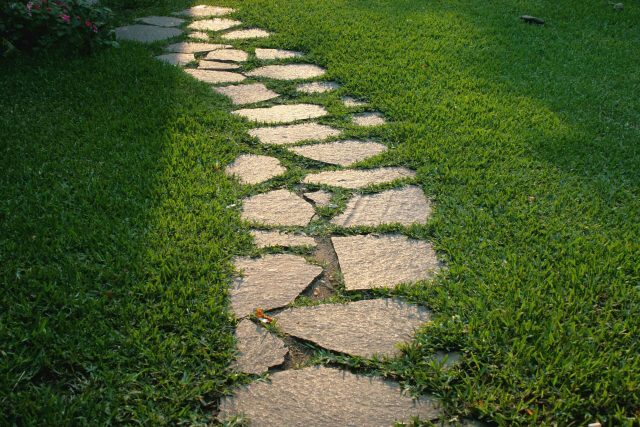
Sandstone paving can do much more than cover a flat patio area. It can shape the whole garden. Curved paths can lead visitors through planting borders toward a seating corner or water feature. Larger patio spaces can be broken into zones for dining, relaxing, or entertaining. Slight level changes can make an outdoor layout feel more interesting without becoming complicated. Some gardens use mixed-media designs too, blending stone with timber, gravel, or planting to create a space that feels more layered and less rigid.
There are plenty of ways to use it well. Curved pathways can soften the feel of a garden and guide people naturally through the space. Zoned patios can separate a dining area from a fire pit or lounge section. Mixed slab patterns can add movement and texture, while planting joints filled with thyme or lavender bring a softer edge to the stone. Even steps and pergola bases can be built into the overall scheme to tie the whole design together.
Cost matters too, obviously.
Sandstone usually costs more upfront than plain concrete or basic block paving, often around £50 to £100 per square metre installed. Even so, many homeowners see the extra spend as worth it because of the longer lifespan and the added kerb appeal. Over time, that can translate into better value, especially when compared with lower-cost materials that need replacing much sooner. A 20 square metre patio might cost about £2,000 at the start, but it can save hundreds in future replacement costs compared with cheaper alternatives.
Installation is one area where cutting corners can backfire. Professional fitting, often around £20 to £40 per square metre, helps ensure the base and bedding are done properly. That matters for drainage, frost resistance, and long-term stability. Spend less now, pay more later… it happens.
When it comes to buying sandstone paving, supplier choice makes a difference. Reputable sellers usually offer a wider range of colours, finishes, and stone types, from buff Yorkstone-style slabs to multi-toned Indian sandstone. Reclaimed yards can also be worth a look if you want older stone with more character and patina. Either way, it helps to inspect samples in natural light before ordering. Look for consistent veining, reliable finish quality, and BS EN 1341 certification, which indicates the stone meets standards for outdoor paving and freeze-thaw performance.
Some suppliers now offer digital previews or AR tools as well, which can help you picture the layout before committing. Useful, honestly.
Sandstone paving keeps its place in garden design for a reason. It brings together style, strength, and flexibility in a way few materials manage. And when it is chosen carefully and installed well, it does more than improve an outdoor space — it makes it feel complete.