
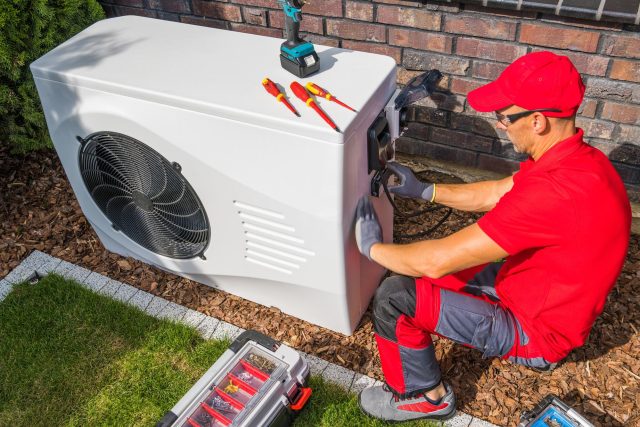
If you’ve seriously considered switching to a heat pump, you’ve already taken the first step toward a smarter, more efficient way of heating your home. But beyond the ads and promises, there’s one crucial detail that makes all the difference, the right power output. Many people choose equipment using a simple rule of thumb, “this many square meters equals this many kilowatts” only to find in winter that the system can’t keep up or consumes far more energy than expected. The truth is that a heat pump only works efficiently when it’s perfectly matched to your home’s actual needs. If it’s too small, it will run constantly without ever reaching the desired temperature, but if it’s too large, it will keep turning on and off, ruining its efficiency and shortening its lifespan.
How to Find What You Really Need
The first step to a proper heat pump installation process is to look at your home, not the equipment. How well is it insulated, how many windows does it have, and which direction do they face, what are the average winter temperatures in your area? All of these factors change the calculation completely. Two houses with the same surface area can have totally different heating needs, simply because one has old windows and the other has new high-performance double glazing.
Next, your existing heating system also matters. Heat pumps are most efficient at lower temperatures, that means underfloor heating or large radiators designed for such systems. If you have old radiators that work at 70°C, modifications will be needed to achieve the same level of comfort with lower consumption.
When Power Doesn’t Mean Performance
Many people believe that a more powerful heat pump is always better, but an oversized unit ends up turning on and off every few minutes. This is called short cycling, and it’s one of the fastest ways to wear out a heat pump. Over time, it consumes more energy, breaks down faster, and fails to maintain a stable indoor temperature. On the other hand, if the pump is too small, it will run continuously, leading to the same problems, just from the opposite direction. In both cases, you lose efficiency.
What Really Matters in the Final Calculation
A heat pump installation expert knows that really matters in the end:
- Surface area and ceiling height – a high-ceilinged home needs more energy than a low one, even if they have the same floor area;
- Insulation quality – walls, roof, and windows play a massive role. A poorly insulated house can lose up to half of its heat, no matter how efficient the pump is;
- Average outdoor temperature – in colder areas, the system must perform well even at -10°C or -15°C, not just during mild winters;
- Type of heating system – radiant floors, fan coils, or classic radiators each change how the pump operates.
All these details are combined into a heat load calculation. It may sound complicated, but that’s exactly what a specialist is for.
Why You Shouldn’t Rely on “Estimates”
There are plenty of online calculators promising quick sizing results. The problem is, they can’t see your home, how it’s built, where the real heat losses occur, or what materials were used. A difference of just a few centimeters in insulation thickness can change everything. That’s why, if you want a heat pump that truly saves money it’s worth calling someone who knows exactly what to measure.
The experts at Expert Heating Solutions analyze the home as a living system, how it “breathes,” where it loses heat, what heating type it uses, and how to combine all that data into a balanced setup.