
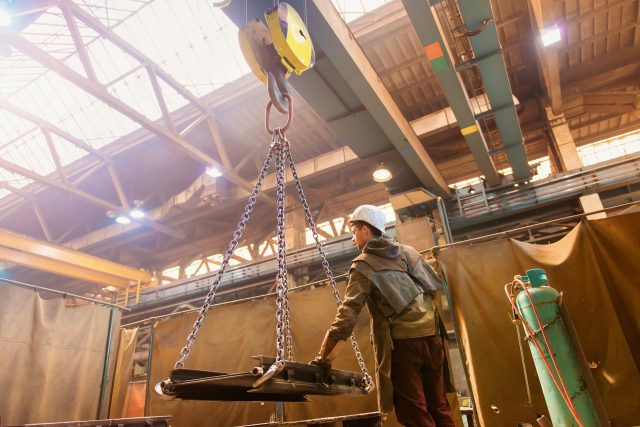
Industrial lifting always looks calmer from a distance than it feels from the floor. A load rises, pauses, travels, and settles. To an outsider it can seem almost routine, just another practiced movement in a warehouse or fabrication bay. But anyone who has spent time near cranes, hoists, or suspended loads knows how quickly routine can turn brittle. A misread weight, a rushed signal, a sling at the wrong angle, and the whole atmosphere changes.
That is why safe lifting never begins with the hook. It begins earlier, with planning.
The UK’s Health and Safety Executive is direct about this. Under LOLER, lifting operations must be properly planned by a competent person, appropriately supervised, and carried out in a safe manner. LOLER also places duties on those who own, operate, or control lifting equipment, while PUWER adds broader obligations around suitability, maintenance, inspection, and training for work equipment.
The planning stage is where experienced teams tend to reveal themselves. They do not just ask what the load weighs. They ask where its centre of gravity sits, how it might shift once tension comes on, what headroom is available, whether the travel path is truly clear, and what happens if something unexpected interrupts the move. HSE guidance on safe lifting by machine warns not to lift a load if there is doubt about its weight or the adequacy of the equipment, and notes that sling-leg loading increases as the angle widens.
That sounds obvious until a site becomes busy.
Then obvious things are exactly what get skipped.
A documented lift plan matters because memory and improvisation are poor substitutes under pressure. This is especially true where overhead gantry cranes are used, since their capacity, duty cycle, and runway condition all shape how safely a lift can be carried out. The plan should confirm equipment capacity, accessory suitability, communication methods, and the sequence of the lift itself. In more complex operations — tandem lifts, synchronised movements, awkward loads with uneven geometry — that structure becomes even more critical. HSE’s guidance on planning lifting operations says the plan should address risks identified by assessment, define procedures and responsibilities, and ensure the equipment remains safe for the range of lifting tasks involved.
Equipment integrity is the next layer, and this is where too many organisations settle for compliance language when they should be thinking about failure modes. LOLER requires thorough examination of lifting equipment, and HSE makes clear that this needs to be backed by proper records and carried out by a competent person. But legal compliance is only the starting line.
Wear does not announce itself dramatically at first. A chain elongates slightly. A brake loses crispness. A limit switch starts behaving intermittently. A wire rope carries the first signs of corrosion or deformation. These are not small details. In lifting operations, they are often the early clues that separate a controlled day from a serious incident. Preventive maintenance, especially when it includes routine checks on braking systems, load-holding capability, structural members, overload protection and electrical faults, is what keeps those clues from becoming consequences.
I have always found it faintly unsettling how ordinary damaged equipment can look until someone points to the one flaw that matters.
Modern systems help, to a point. Diagnostics and condition monitoring can flag overheating, excessive usage, or abnormal behaviour earlier than old maintenance routines once allowed. That is useful. But technology does not remove responsibility; it sharpens it. Alerts still need to be read, interpreted, and acted upon by people who know what they are looking at.
And people remain the most unpredictable part of any lifting operation.
HSE’s PUWER guidance emphasises training and competence, and for good reason. Even sound equipment becomes hazardous when operators work outside rated limits, ignore load charts, or treat signalling as an informal background skill rather than a critical control. Side loading, shock loading, poor hand signals, uncertain radio communication, or a casual assumption that “it’ll be fine for one lift” — these are the habits that safety systems are supposed to prevent.
A strong site safety culture is what stops those habits taking root. Clear floor markings, exclusion zones, audible warnings, and visible supervision are not bureaucratic theatre. They are reminders that pedestrians and suspended loads should never be allowed to negotiate space by instinct. Just as important is giving operators and signallers the confidence to stop a lift when something feels wrong. Near-miss reporting, done honestly, is one of the few ways a site learns before someone gets hurt.
The best lifting operations rarely look heroic. They look deliberate. The load is known. The route is clear. The equipment is right for the task and properly maintained. The team communicates without drama. No one is guessing, and no one is pretending speed is the same thing as efficiency.
That is the discipline worth paying attention to. Industrial lifting safety is not created by one regulation, one inspection, or one well-run shift. It is built repeatedly, through engineering judgment, maintenance standards, careful supervision, and a workforce that knows heavy loads do not forgive casual thinking. On sites that understand this, productivity does not compete with safety. It depends on it.