
Choosing the right fasteners determines the load-bearing capacity, watertightness, and durability of the entire sandwich panel cladding system. Using appropriate self-drilling screws minimizes the risk of leaks, thermal bridges, and localized corrosion, protecting the structure against wind and snow loads. This article explains the technical specifications of fasteners, the principles of matching them to different substrates, and methods for avoiding common installation mistakes, ensuring the safe and long-lasting operation of industrial buildings.
Introduction to Sandwich Panel Installation
Installing a cladding system made of multilayer panels requires strict adherence to engineering guidelines. Understanding the technical parameters of individual fasteners is essential for ensuring the stability of the entire building structure.
What Are Sandwich Panels?
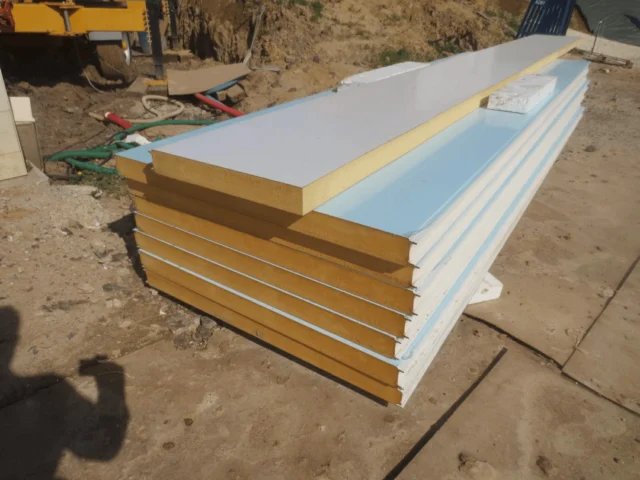
Sandwich panels are prefabricated wall and roof cladding elements consisting of two steel facings (external and internal) and an insulating core made of PIR, PUR, or mineral wool. Their composite structure provides excellent thermal and acoustic insulation as well as mechanical resistance. This material enables the rapid construction of warehouses, manufacturing facilities, and agricultural buildings. The load-bearing properties of sandwich panels require proper anchoring to the supporting structure, ensuring that the building maintains its energy-efficient performance over many years.
Why Is Choosing the Right Screws Essential?
Properly selected mechanical fasteners are responsible for safely transferring loads from the facade and roof to the building’s main structural framework. Using unsuitable fastening elements can damage protective coatings, weaken the load-bearing capacity of the panel facings, and cause leaks. The cladding system’s resistance to wind suction forces (pull-out loads) and shear forces depends directly on the technical specifications and correct selection of the screw shank. Technical advice from manufacturers such as Marcopol helps accurately match the thread type, head shape, and sealing material to the specific requirements of a construction project.
Types of Fasteners for Sandwich Panels
Self-drilling fasteners are the primary fastening system used in this technology. They drill the hole, form the thread, and secure the panel to the supporting structure in a single operation. In addition to standard threaded fasteners, suitable expansion anchors and sleeves are used in specific concrete applications. Individual types differ in their drilling capacity (the maximum drilling thickness), allowing direct installation into thin-walled cold-formed profiles or heavy hot-rolled I-beams. The correct classification depends on the hardness and thickness of the supporting substrate.
Screws for Sandwich Panels
Specialized sandwich panel screws feature an additional thread beneath the head that stabilizes the external steel facing. Their geometry is precisely adapted to the specific loading conditions and physical characteristics of the building.
Self-Drilling Screws for Sandwich Panels
Self-drilling fasteners streamline the installation process by eliminating the need to pre-drill the panel facings or the supporting structure. The geometry of the drill point at the end of the shank ensures efficient removal of metal chips and smooth penetration into steel or wood. The dual-thread design, consisting of a main thread at the lower end and a supporting thread beneath the head, prevents indentation of the external steel facing during tightening. Correctly adjusting the rotational speed of the power tool prevents the hardened drill point from overheating during installation.
Screws for Roof Sandwich Panels
Roof fasteners must withstand significantly higher pull-out forces and provide complete watertightness in areas directly exposed to rain and snow. These elements are most commonly installed through a saddle washer (profiled washer) at the crest of the roofing profile, minimizing the risk of water accumulating around the fastening hole. The shank of this type of fastener has an increased diameter, while the head is combined with a thicker, highly flexible sealing washer. The corrosion-resistant coating must correspond to the environmental exposure class of the roof covering, providing protection against acid rain and UV radiation.
Screw Length and Fastening Requirements
The minimum shank length must account for the thickness of the panel being secured, the required anchoring depth in the substrate, and additional length for the self-drilling point. A thread that is too short will not provide the required pull-out resistance in a steel profile or wooden purlin. Excessive length unnecessarily increases investment costs and may increase the risk of material deformation when driving screws into very thick substrates. Detailed engineering tables specify the clamping thickness range (Lmax and Lmin values) for each fastener size.
Fastening and Joining Sandwich Panels
A complete installation system includes not only mechanical fasteners but also flashing elements and seals that connect individual panels into a continuous building envelope. Only a comprehensive approach ensures the elimination of unnecessary heat loss.
Profiles and Fasteners in Installation
Base, corner, and eaves profiles provide mechanical protection for the exposed insulation core along the edges of the building. These elements are secured using short stitching screws, which connect only the thin metal facings without damaging the insulation layer. The correct installation sequence of flashing elements prevents rainwater from penetrating beneath the wall panels. Covering and finishing systems also enhance the aesthetic appearance of industrial facades.
Washers and Seals – The Importance of EPDM
Vulcanized EPDM rubber creates a durable waterproof barrier between the steel screw head and the panel surface while simultaneously absorbing structural vibrations. This material resists degradation caused by extreme temperature fluctuations and solar radiation. When properly compressed, the rubber should extend slightly beyond the edge of the metal pressure washer, indicating the correct tightening torque. Ignoring this detail can lead to corrosion developing around damaged paint coatings.
Common Fastening Mistakes
Stripping the thread in a thin steel substrate is one of the most common installation defects. It compromises the mechanical integrity of the connection and can completely eliminate its load-bearing capacity. Other frequent mistakes include drilling at an angle rather than perpendicular to the surface, which deforms the EPDM washer and immediately allows water to penetrate the connection. Using standard electroplated zinc coatings in chemically aggressive environments, such as pig farms, causes rapid corrosion of the entire fastening assembly. Failing to remove metal chips from the panel surface after drilling can also lead to surface rust deposits appearing on the newly installed facade.
Technical Specifications
Verifying the mechanical performance of a fastener involves analyzing its corrosion resistance class and characteristic load-bearing capacity under pull-out and shear forces. These values are rigorously tested and confirmed in European Technical Assessments.
Sandwich Panel Screws – Which Should You Choose?
The specifications of the optimal fastening element are determined by a detailed analysis of wind loads, the designated snow load zone, and the type of supporting structure. Shank diameters typically range from 5.5 mm for lightweight wall applications to 6.3 mm for demanding large-area roofing systems. The head shape, most commonly an SW-8 hexagonal head, determines how securely the installation tool engages with the fastener. Products designed for specific insulation cores, such as soft mineral wool, feature an enlarged supporting thread that minimizes indentation of delicate panel facings.
How the Substrate Material Affects Screw Selection
The geometry and length of the drill point are determined primarily by the thickness of the supporting profiles. Structures made of cold-formed steel sections up to 3 mm thick require short drill points that accelerate the start of thread formation. Heavy steel structures, such as I-beams with a thickness of 12–14 mm, require drill points with extended cutting edges that prevent jamming in thick, hard material. Wooden and concrete structures require fasteners without an integrated drill point. These have sharp tips designed to penetrate wood fibers or specialized threads intended for installation into pre-drilled holes.
Corrosion Resistance and Protective Screw Coatings
The operating environment of the facade determines the need for advanced protective coatings, such as zinc-flake coatings (e.g., Ruspert or Dacromet), or the use of bimetallic steel. The corrosion exposure category, ranging from C1 (dry indoor environments) to C5 (marine and heavy industrial environments), determines the appropriate fastener material. Traditional electroplated zinc coatings perform reliably primarily in indoor conditions. Multilayer ceramic coatings are commonly used for outdoor applications, while chemical plants and wastewater treatment facilities require bimetallic fasteners combining an A2/A4 stainless steel shank with a welded-on, hardened carbon steel drill point.