Fixing into brick walls sounds straightforward, as we think of brick as strong and sturdy, but it is one of those jobs where little mistakes lead to more serious problems. Without using the right tools and taking appropriate care, you can quickly be left with cracked brick faces or loose fittings that will fall apart at random, each of these can cause expensive and sometimes irreversible damage. The good news is most of these issues are easy to avoid if you understand how brick behaves when being drilled into and take appropriate care.
Brick is strong, but it is also more brittle than you might expect. Timber, for example, is fibrous which make it more flexible and workable. If too much force is applied too quickly in the wrong place of brickwork, the surface can easily chip, split, or crack. This is why drilling and fixing into brick should be treated differently from fixing into wood or any other material. The aim is not simply to create a hole, but to create a clean, sturdy fixing point that can take the load without damaging the brick or mortar. Another tip that might sound obvious but is crucially important is to measure and mark, as explained on DoItYourself.com “never take on any DIY project without first measuring and marking the area where you’re going to drill. Figure out exactly where you want to place your holes and use chalk to make clear, distinct marks showing where you will be drilling.
The most important task is to firstly choose where to drill. Mortar joints can look tempting because they are softer and easier to drill into, but this is actually where the structure is weakest as mortar is far weaker than brick itself. Also try and avoid drilling too close to the edge of a brick, as edges are very likely to split, especially with older or exterior brickwork, as there the brick will already have suffered some weathering. It might sound obvious too but always position your fixing away from chips or damaged areas. With all standard brickwork, drilling into the centre of a brick is the best approach, as it is the most structurally sound point and gives the fixing a stronger base, reducing the likelihood of movement over time. A bit of patience, care and planning at this stage will lead to a sturdy fixing that can last years and years, rather than falling apart and causing irreversible damage.
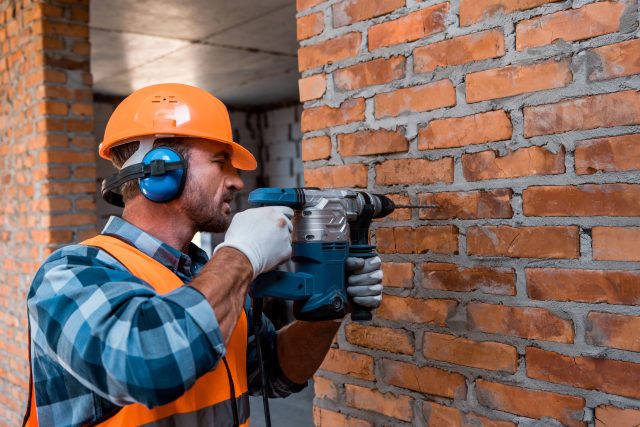
Secondly, make sure that you have the correct drill bit, as this is just as important as the drilling point. Check to see if you have a masonry bit, as this is designed for hard materials and will cut more cleanly than a general-purpose bit, as explained by DIY Doctor “Always use proper masonry drill bits. These have a flat cutting tip slightly wider than the shaft, allowing debris to escape through the grooves. Avoid cheap drill bits of this type, they blunt quickly, force you to push harder and can damage your drill due to this over time.”. Start slowly to create a neat entry point, then increase the speed once the bit is settled, as going in too fast from the beginning can cause the drill to jump or vibrate, which puts unnecessary stress on the brick. Also ensure to affix a drill stop to avoid drilling deeper into the brick than your fitting requires, as this will make the fitting loose and fall out easily.
Hole size is another common cause of problems. If the hole is too small, the fixing has to be forced in, the pressure of which can lead to cracking and if the hole is too large, the fixing will not grip properly. Always start with a small drill bit to make a pilot hole, then match the drill bit size to the fixing you are using, rather than guessing. This is a simple step, but it makes a big difference to the strength and lifetime of the end result.
Once the hole has been drilled, you will need to clear out the brick dust before inserting the fixing, as dust inside the hole will prevent the fixing from seating properly and gripping into the brickwork. A compressed air canister comes in handy here to help blast out and loosen up any brick dust or other particles, followed by vacuuming to suck up all the dust.
The fixing itself should be chosen based on the weight and purpose of the item being installed. Items such as a light picture frame or small house number will likely only need a basic wall plug and screw. Heavier items, such as shelves, brackets or gates will need something stronger, such as masonry screws, sleeve anchors and bolts. Choosing a fixing that is slightly stronger than you think you need is usually safer than choosing one that is only just suitable. For a huge choice of fixings for all sorts of jobs, including drilling into brick, Speedy Fixings will have the right solution for your needs.
External fixings need extra thought because they are exposed to rain, frost, and temperature changes. Corrosion-resistant fixings are usually worth using outdoors, particularly for gates, lighting, signs, and garden structures. If water can get into the hole, sealing around the fixing can also help protect both the brick and the fixing over time.
Lastly, the condition of the brick is very important too, as brickwork becomes more fragile and brittle over time due to its exposure to the elements. The repeated heating and cooling it will experience, especially here in the UK with wet springs, hot summers and freezing winters, will all contribute to a bricks overall health and sturdiness. If the brickwork is very old and fragile, unfortunately taking a different approach to drilling into it may need to be considered.
Ultimately, as with so many other jobs avoiding disaster when drilling and fixing into brick comes down to preparation rather than luck. Choose the right spot, appropriately mark it, drill carefully and with the right equipment, use the correct fixing, and avoid applying unnecessary force. Follow all these steps and you’ll be left with a fixing that will stand the test of time.