For many homeowners, the problem is not a lack of property potential but a lack of practical space. A dining table becomes a desk, a spare room turns into storage, and the garden often ends up underused for most of the year. When that happens, moving house can seem like the obvious answer — but it is not always the smartest one.
In many cases, it makes more sense to improve how your current home works rather than take on the cost, stress and disruption of relocating. The key is to focus on space that is more functional, more flexible and better suited to modern life.
Start by rethinking how each area is used.
Before spending money on any major changes, it is worth stepping back and asking a simple question: which parts of the home are actually working well, and which are being forced to do too much?
Many households now need space for remote work, hobbies, fitness, children’s study and quiet downtime — often all within the same property. That usually means one room is carrying too many roles. A better layout, improved storage, or a more purposeful use of an overlooked area can make a surprising difference.
Sometimes the answer is not more square footage, but better planning.
Make underused outdoor space work harder.
One of the most overlooked opportunities in a home is the garden. While many people think of it only as seasonal leisure space, it can also become one of the most useful parts of the property when designed properly.
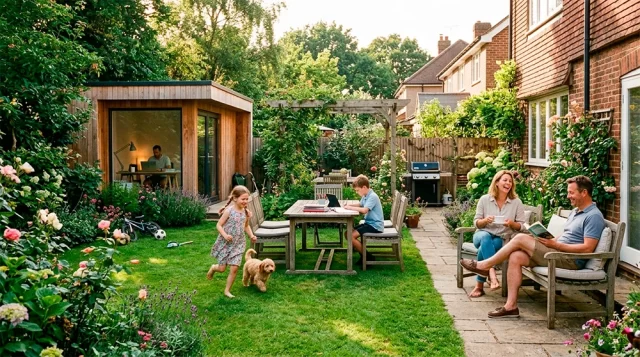
A well-planned outdoor structure can create valuable separation from the main house while still feeling connected to everyday life. This is especially useful for people who work from home, need a hobby room, or simply want somewhere quieter than the kitchen or living room.
For homeowners exploring practical ways to expand their living space, garden buildings can offer a flexible alternative to a full extension or house move.
Create a dedicated zone for work or focus.
One of the biggest pressures on modern homes is the need for quiet and uninterrupted space. Working from the sofa or kitchen table may be manageable in the short term, but over time it affects concentration, comfort and the ability to switch off.
Creating a dedicated room for work does not necessarily mean building a full extension. In many cases, a separate garden office or insulated outdoor room can provide exactly the separation that people need. It also helps preserve the rest of the home for family life, rather than allowing work to spill into every corner.
This is one reason more households are considering garden office solutions when they need extra usable space without the upheaval of major building works.
Invest in storage before expanding.
Clutter can make a home feel much smaller than it really is. Before deciding that the house no longer works, it is worth looking at whether the problem is actually poor storage rather than limited space.
Built-in cupboards, bench seating with hidden storage, understairs solutions and more thoughtful utility layouts can all free up valuable room. When everyday items have a proper place, the home instantly feels calmer and more usable.
This kind of improvement may not be as eye-catching as a renovation but it can have a major effect on how spacious a property feels.
Think in terms of flexibility, not single-use rooms.
The most useful homes are rarely the biggest. They are usually the ones that adapt well.
A guest room that doubles as a study, a garden room that works as both an office and reading space, or a dining area with integrated storage can all make a property feel more capable without increasing its footprint dramatically.
When planning improvements, it helps to think long-term. A space designed around one very narrow purpose may become less useful over time, while a flexible room can evolve with the household.
Improve comfort as well as function.
Usable space is not just about where things go. It is also about whether a space feels comfortable enough to use properly. Poor lighting, cold corners, awkward layouts and noisy shared areas often stop parts of the home from reaching their full potential.
Simple changes like better insulation, more natural light, improved flooring or more thoughtful furniture placement can make an ordinary room far more appealing. The same is true outdoors: if a structure is only comfortable in warm weather, it will naturally be used less often.
That is why build quality and year-round practicality matter just as much as appearance.
Focus on solutions that reduce disruption.
One reason many homeowners delay making changes is the fear of mess, cost and months of disruption. But not every improvement has to turn the house upside down.
Compared with moving—and often with large-scale extensions—targeted upgrades can be more manageable and cost-effective. The best projects are usually those that solve a clear daily problem without creating unnecessary complexity.
Whether that means redesigning an existing room, improving storage, or adding a well-planned outdoor structure, the goal should be the same: to make the home easier to live in now, not just more impressive on paper.
Final thoughts.
Running out of usable space does not always mean it is time to move. In many cases, it simply means the home needs to work harder and more intelligently for the people living in it.
With the right approach, it is possible to create more room for work, rest, family life and everyday comfort without leaving the home you already know. The smartest upgrades are often the ones that improve how a property functions day to day — and make it easier to enjoy for years to come.