Metal lockers had a good run. But they’re losing ground — and for good reason.
Wooden lockers have moved well beyond school corridors and gym changing rooms. Today they’re showing up in offices, hotels, healthcare facilities, and high-end leisure spaces, doing a job that metal simply can’t match when aesthetics matter as much as function. The combination of practicality and visual warmth is hard to argue with.
Here’s why they’ve become the go-to choice for organisations that care about how their spaces look and work.
The Obvious Advantage: They Actually Look Good
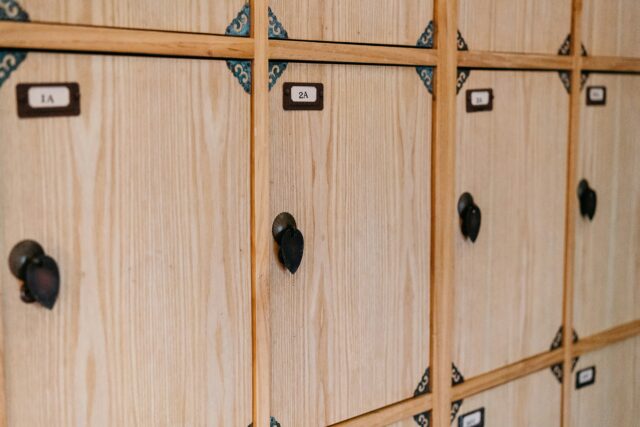
Walk into a well-designed office reception and you’ll notice immediately when the storage doesn’t fit. Bulky grey metal lockers in a space with oak furniture and soft lighting? It jars. Wooden lockers, by contrast, can be matched to existing interiors — finishes, colours, door styles — so the storage becomes part of the design rather than an afterthought bolted onto it.
That matters more than facilities managers sometimes admit. First impressions land fast, and storage units take up wall space. They’re visible. Making them work visually isn’t vanity; it’s just good design.
There’s a noise benefit too. Wooden doors close softly. In open-plan offices, libraries, or healthcare settings, that quieter operation is genuinely useful — the constant clang of metal doors through a workday adds up.
Why Offices Specifically Are Driving Demand
Hybrid working changed the storage equation. When employees aren’t at fixed desks five days a week, personal lockers become the anchor — the one place that’s consistently theirs. Laptops, documents, chargers, personal items: wooden lockers for office environments now serve as the functional home base for a workforce that’s constantly moving around.
Hot-desking without lockers is chaos. With them, it works.
Beyond function, wooden lockers for office spaces help maintain the kind of consistent visual identity that modern workplaces invest heavily in. A reception area, a collaboration zone, a corridor lined with well-finished lockers — these all communicate something about the organisation. Cheap metal systems undercut that investment. Custom timber finishes reinforce it.
Materials: What You’re Actually Buying
Not all wooden lockers are the same, and the material choice shapes everything — cost, durability, appearance, and maintenance.
Solid timber sits at the premium end. Excellent visual appeal, long lifespan when maintained properly, higher price tag. For executive suites or boutique hotel spaces, it’s often the right call.
Laminate-faced MDF and particleboard cover most commercial applications. Durable, consistent, easy to clean, resistant to scratches and stains — and priced competitively. For most offices and educational facilities, laminate systems hit the sweet spot between performance and budget.
Wood veneer finishes split the difference: the look of natural timber, the practicality of engineered materials. You’ll find them in high-end offices and hospitality settings where appearance is the priority but solid timber costs can’t be justified.
Security Hasn’t Been Left Behind
The old knock on wooden lockers — that they’re less secure — doesn’t hold up anymore. Modern systems support everything from basic key locks to RFID access and smartphone-enabled locking technology. For organisations managing valuable equipment or confidential documents, electronic systems offer the kind of control and accountability that key-based options simply can’t.
The right locking system depends on context. A leisure centre has different requirements than a law firm. But the options are there.
The Durability Question
Here’s the misconception worth addressing directly: wooden lockers aren’t fragile. Quality matters enormously — materials, manufacturing standards, the robustness of hinges and locks — but a well-built wooden locker in an appropriate environment will last for years without drama.
The caveat is moisture. High-humidity spaces, wet changing rooms, poolside facilities — these environments need specialist moisture-resistant products. Standard wood-based materials aren’t built for that, and pushing them into wet conditions is asking for trouble.
Routine maintenance is straightforward: wipe down surfaces, inspect locks and hinges periodically, keep ventilation clear. Nothing onerous.
Cost and Sustainability — The Longer View
Wooden lockers cost more upfront than basic metal alternatives. That’s simply true, and there’s no point obscuring it.
The more useful question is what the cost looks like over five or ten years. A durable locker system that holds its appearance and function across a decade compares well against cheaper alternatives replaced every few years — in both financial and environmental terms. Many manufacturers now use responsibly sourced timber and certified materials, and a longer product lifespan reduces the environmental cost of replacement cycles.
For organisations with sustainability commitments baked into procurement decisions, that calculation matters.
Conclusion
Smart lockers are gaining ground fast — mobile access, digital management platforms, usage tracking. In office environments especially, the ability to manage locker allocation remotely and monitor usage patterns is becoming a real operational advantage rather than a novelty.
Modular systems are popular for obvious reasons: they can expand or reconfigure as the organisation changes, without requiring a full replacement.
The direction of travel is toward storage that’s smarter, more flexible, and better integrated into the spaces it serves. Wooden lockers are well-positioned for that shift — the aesthetic case was always there, and the technology is catching up.