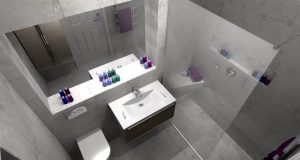

Moisture-resistant plasterboard belongs anywhere a room produces steam, condensation or splashing regularly: bathrooms, shower surrounds, kitchens, utility rooms, below-ground spaces and cold external walls being dry-lined. Standard board in those positions absorbs moisture through the core, then softens, swells and gives mould a surface to grow on behind the finish. Water-resistant plasterboard uses a treated core and a moisture-repellent facing paper to hold up under humidity while installing the same way as any other sheet.
Specifying it correctly means knowing where it is genuinely required and where it is over-specification. This guide sets out the rooms and wall positions that need a moisture-rated board during a renovation, which grade suits each level of exposure, and the situations where board choice alone will not solve the problem.
How to Identify a Room That Needs a Moisture-Rated Board
Three conditions push a room past the limit of a standard board. Any one of them justifies upgrading the specification for that wall:
- Sustained airborne humidity, where steam from showers, cooking or drying laundry sits in the room long after use
- Repeated condensation, forming wherever warm internal air meets a cold wall surface, window reveal or lintel
- Direct water contact, from showering, splashing at a basin or spray around a sink
Older UK housing raises the risk further. Single-skin brickwork, uninsulated substrates and weak extraction all let humidity sit in a room for hours after use rather than clearing. Sustained damp air over months is what breaks standard boards down, not a single wet weekend.
A practical rule when planning a job: map exposure wall by wall rather than room by room. The wall behind a shower and the wall behind the towel rail in the same bathroom carry very different loads, and specifying the whole room to the highest grade adds cost without adding protection.
Suppliers such as Online Insulation stock plasterboard for bathrooms and kitchens from manufacturers including Knauf. This lets installers match the board grade to the exposure level of each wall instead of ordering a single specification for the whole project.
Bathrooms and Shower Enclosures
Bathrooms are the main use case. Hot water raises humidity fast, condensation forms on every cold surface, and the enclosure itself takes direct water contact with every use.
Installers usually work to three zones:
- Zone 1 covers the inside of a shower or bath enclosure. A tile-backer board such as Glasroc H or a cement-based board is the correct specification here.
- Zone 2 covers wall areas immediately outside the enclosure, along with the surfaces around a basin. A moisture-rated plasterboard is suitable.
- Zone 3 covers the rest of the room, which faces general airborne moisture rather than splashing.
Failures cluster in Zone 1, and nearly always for the same reason. A moisture-rated board goes in behind the tiling on the basis that the tiles and grout will keep water out. Grout is not a waterproof layer. Hairline cracking in grout lines and adhesive beds lets vapour through over a few years, and the board behind it takes the load it was never rated for. Tile-backer or cement board in wet zones, with a tanking membrane over it, is the specification that holds.
Kitchens, Utility Rooms and Laundry Spaces
Kitchens generate steam from cooking and condensation where warm air meets cold external walls. Utility and laundry rooms add appliance moisture from washing machines, tumble dryers and dishwashers, often in a small room with a single vent.
Exposure is lower than a bathroom, so a full wet-zone specification is rarely needed. Moisture plasterboard is the sensible choice for walls behind sinks, around appliances and along any external wall in the room. Splashbacks and the wall directly behind a hob are the exception, where a tiled finish over a tile-backer board makes more sense.
Finishing matters as much as board selection. Sealing cut edges, using moisture-rated jointing compound and getting a proper bead of sealant behind worktops and around the sink stops water reaching the core at the points where boards are most vulnerable.
Basements, Cellars and Below-Ground Rooms
Below-ground rooms are where board specification most often gets asked to do a job it cannot do. Ground moisture reaches these walls under hydrostatic pressure, which no plasterboard product is designed to resist.
BS 8102 covers protection of below-ground structures from water ingress, and the principle is straightforward: dry-lining a basement wall without either a tanking slurry or a cavity drain membrane behind it leaves the board exposed to water the building is still letting in. Waterproof plasterboard fitted onto a wall that is still actively damp will typically fail within a few years, showing mould growth and softening at the base.
Get the waterproofing system in first. Once ground moisture is controlled, a moisture-rated board such as Knauf Moisture Panel or Gyproc Moisture Resistant works as the internal finish, either on battens or on a proprietary lining system.
External Walls and Cold Spots
Solid brick or block external walls, common in properties built before cavity construction became standard, run cold enough in winter for interstitial condensation to form where warm internal air meets the wall build-up. Bedrooms and north-facing rooms show it as mould in corners and behind furniture.
Where these walls are being dry-lined or insulated, the plasterboard sits on the warm side of the insulation layer and still needs to cope with condensation risk. A moisture-rated board is worth specifying at this position, particularly in rooms with limited ventilation or on elevations that take the weather.
Specify by Exposure, Then Order
Board selection follows a short sequence on any renovation: identify the exposure level of each wall, confirm the substrate is dry and any waterproofing is in place, then match the grade. Tile-backer or cement board for direct wet contact, a moisture-rated plasterboard for humidity and splashing, standard board everywhere else.
The two errors worth designing out are specifying a moisture-rated board for a wall that needs a tile-backer, and installing any board over a wall that has an unresolved damp source behind it. Both cost more to put right than the board saved.
Work out the zones before ordering, then buy the grades to match. Marking up a floor plan with the exposure level of each wall takes a few minutes and gives a board schedule that can go straight onto an order, which keeps the wet zones correctly specified and avoids paying for a moisture rating on walls that will never need it.