
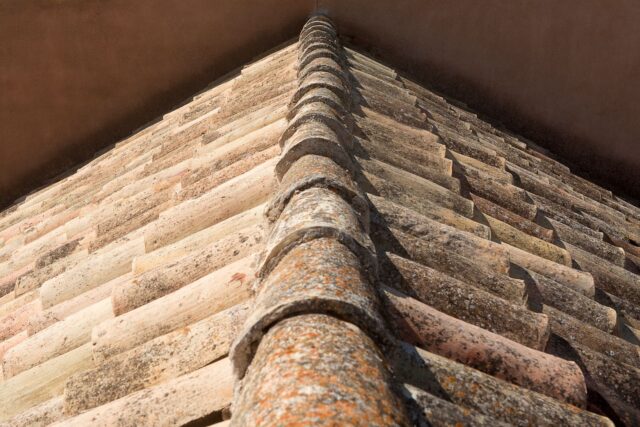
Ask most people where a roof leaks and they’ll point at the tiles. Missing one, cracked one, slipped one. Fair enough, that happens. But on the houses we work on most, the tiles are rarely the weak point. It’s the joins. The ridge along the top, the hips running down the corners, and the valleys where two slopes meet and pour all their water into one narrow channel.
Croydon is full of roofs where those joins are doing a lot of work. Tens of thousands of interwar semis with hipped roofs, bays and back additions, most of them now ninety-odd years old and on their second or third set of mortar. When those joints give up, the leak tends to show up in an odd place, often a bedroom corner or the top of a bay, and people assume it’s something more serious. Here’s what usually goes wrong, how to spot it, and what fixing it costs.
Why Hipped Roofs Need More Attention
A plain gable roof has one ridge and two flat slopes. A hipped roof, the classic 1930s shape, has a ridge plus four hips, and every one of those hips is a line of tiles bedded in mortar along a joint. Add a bay roof at the front and a valley where the back addition meets the main roof, and a typical semi in Shirley, Addiscombe or Selsdon can easily have 20 metres or more of mortar-bedded joints.
Mortar doesn’t last forever. Sand and cement bedding cracks with frost and with the small movements every roof makes as it heats and cools. Once it cracks, water gets in behind the hip tiles and they start to loosen. A lot of the calls that come to Roof Repairs Croydon as “a few tiles need doing” end up as hip and ridge work once someone is up there looking at it properly. It’s easily the most common job on interwar stock round here.
The other thing about these houses is that many were re-roofed in the 1970s and 80s with heavier concrete interlocking tiles replacing the original clay plain tiles. That was cheaper at the time, but it puts more weight on rafters that were never designed for it, and the hips and valleys were often detailed in a hurry.
The Three Joints and How Each One Fails
You can check a lot of this from the pavement or a back bedroom window with binoculars. Please don’t go up a ladder onto a hipped roof. The slopes are steeper than they look and there’s nowhere to stand.
Ridge
The tiles along the very top. Look for gaps in the mortar, mortar lying in the gutter, or a ridge line that looks wavy rather than straight. A loose ridge tile in a gale is a genuine danger to anyone below.
Hips
The diagonal lines running down from the ridge to the corners. Same signs as the ridge, plus a missing hip iron (the curled metal bracket at the bottom that stops the bottom tile sliding off). If that’s gone, the whole line can creep.
Valleys
The internal corners where two roof slopes meet. On older houses these are often lined with lead, or formed with special valley tiles, or on cheaper re-roofs, a strip of mortar. Valleys carry a huge amount of water in heavy rain, so even a small split in the lead or a gap where leaves have built up can send water into the loft. If you get a leak that only appears during downpours, the valley is our first suspect.
Repair or Re-bed: How We Decide
If one or two ridge or hip tiles are loose but the rest are solid, re-bed those tiles. That’s a small job.
If the mortar is cracked along most of the run, or tiles have been patched more than once, re-bed the whole ridge or hip. Patching individual tiles on a run that’s failing everywhere is just booking the next call-out.
If you’re re-bedding anyway, it’s worth asking about a dry fix system. Instead of relying on mortar, the ridge and hip tiles are mechanically fixed with clips and screws over a breathable roll. It costs a bit more, but it’s maintenance-free for decades and it handles movement far better. Since the British Standard for slating and tiling was updated in 2014, it has required ridge and hip tiles to be mechanically fixed rather than held by mortar alone, so on new work, a decent roofer will be doing this anyway.
For valleys, lead is still the best option on a period house. A properly laid lead valley can last 50 years or more. Mortared valleys are a false economy, and so are some of the cheap plastic valley liners that were fashionable for a while.
What This Kind of Work Costs
Typical 2026 figures for a standard two-storey semi in South London. Prices assume tower or roof ladder access; full scaffold adds to these.
- Re-bedding a few loose ridge or hip tiles: £200 to £450
- Re-bedding a full ridge in mortar: £500 to £900
- Re-bedding all hips and ridge on a hipped semi: £1,200 to £2,200
- Dry fix ridge and hips on a hipped semi: £1,600 to £2,800
- Replacing a lead valley (per valley): £700 to £1,500
- Clearing and resealing a valley: £150 to £350
- Replacing missing hip irons: £60 to £120 each, much less if access is already up
- Scaffold if needed: £700 to £1,400 for a semi, more on a three-storey Victorian house
If you’re having gutters or fascias done, get the hips and ridge looked at in the same visit. Paying for access twice is the most common way people overspend on roofs.
Local Things Worth Knowing
The borough has a real mix. South Norwood and Thornton Heath have Victorian and Edwardian terraces with slate roofs and lead-lined valleys between the main roof and back additions. Purley and Coulsdon have large detached interwar houses with complicated roofs full of hips, bays and dormers. Shirley, Addiscombe and Selsdon are interwar semi country, row after row of hipped roofs.
Some streets fall in conservation areas, and in those you should check with the council before changing roof materials, swapping clay tiles for concrete, or altering a visible ridge detail. Like-for-like repairs are normally fine.
Choosing Someone Good
Ask to see public liability insurance, ideally £2 million or more, and check the expiry date. NFRC membership or a TrustMark registration is a good sign. Get a written quote that says whether the ridge and hips will be mortar or dry fix, what’s happening to the valleys, and who’s providing access.
Ask for photos before and after. Any decent firm will happily take pictures of cracked bedding from the roof so you can see it for yourself.
A deposit of 20 to 30% for materials is reasonable. Treat anyone who knocks at the door saying they’ve spotted loose ridge tiles from the street with real caution. Sometimes they’re right. Often the “loose” tiles are fine and the quote is anything but.
If your ridge or hips are looking tired, or a leak keeps turning up in the same corner after heavy rain, get Roof Repairs Croydon to take a look before the winter storms do more damage.
Frequently Asked Questions
How much does it cost to re-bed a ridge in Croydon?
Re-bedding a full ridge in mortar on a typical semi costs around £500 to £900. Re-doing all the hips and ridge together is usually £1,200 to £2,200, or £1,600 to £2,800 with a dry fix system.
Is dry fix ridge better than mortar?
For most roofs, yes. Dry fix uses clips and screws instead of relying on mortar, so it doesn’t crack with frost or movement and needs very little maintenance. It costs more up front but tends to save money over 20 years.
Why does my roof only leak in heavy rain?
That pattern usually points to a valley or a gutter that can’t cope with the volume. A small split in a lead valley, or leaves and moss blocking it, lets water overflow into the loft only when a lot of rain arrives at once.
Do I need permission to repair my roof in Croydon?
Like-for-like repairs don’t normally need planning permission. If your house is in a conservation area and you want to change the tile type or alter visible details, check with the council first.
How long does hip and ridge work take?
Re-bedding a few tiles takes a couple of hours. Doing all the hips and ridge on a semi usually takes two to three days, weather permitting, plus any time to put up and take down access.