If you’ve never smelled gas in your home and thought everything was fine, you’ve already met carbon monoxide’s biggest trick. Carbon monoxide, or CO, has no smell, no colour and no taste, so a room can fill with it while everything still looks, sounds and smells normal. That’s why fire and safety advice describes it as “the hidden danger.”
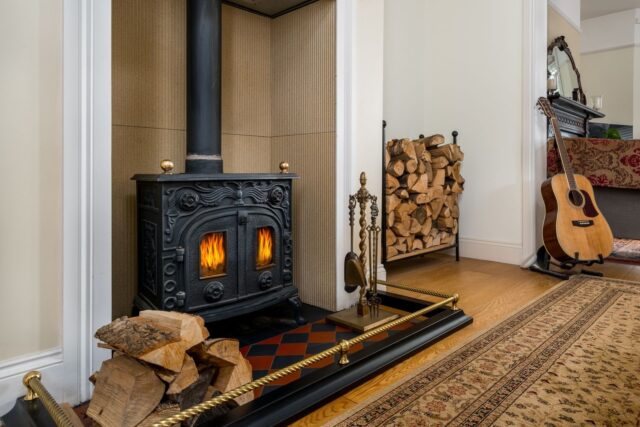
It happens when fuel burns without enough oxygen to burn clean. Gas boilers, open fires, wood-burning stoves, gas cookers and space heaters can all produce it. Often the cause is simple. The appliance is broken, poorly kept up, or running in a room without enough fresh air.
A blocked flue can do it. So can a cracked heat exchanger, or a chimney that hasn’t been swept in a while. Any of these can turn an appliance that’s worked safely for years into a danger, with no warning sign you’d notice.
Why detection has to come first
Early symptoms, headache, dizziness, nausea and tiredness, are easy to miss, and just as easy to mistake for flu, most often at night. You might blame a late night or a bad mattress.
By the time symptoms are clear, you may already have breathed in a lot of it. That’s the real problem with trusting how you feel: your body isn’t a good early warning system, and it was never built to be one.
This is why you can’t rely on your own senses: you need a device that measures what your nose and eyes can’t. A carbon monoxide detector does just that. It checks the air all the time and sounds a warning before levels get too high, giving you time to open a window, switch off the appliance and get an engineer out.
It’s worth being honest about what an alarm can’t do. It tells you there’s a problem, not what caused it, and finding the cause still needs a trained engineer. Think of it as a smoke alarm for a gas you can’t smell: an early warning, not a fix.
The UK Health Security Agency publishes advice on CO poisoning: how many people it affects each year, and who’s most at risk.
Placement matters as much as ownership
Owning an alarm is only half the job. Where you fit it decides whether it works.
- Fit one in every room with a fuel-burning appliance: a boiler, an open fire, a wood burner or a gas heater.
- Fit one on each level of your home that has a bedroom on it, since the gas needs to be found before anyone falls asleep near it, not after.
- Mount it at head height, away from the appliance itself. Follow the fitting instructions that come with it, since too close to the source and it won’t read the air as well.
- Test it monthly, and replace it once its sensor runs out, about ten years on current models. It isn’t just the battery that wears out over time; the sensor does too.
In a larger home, or one with several fuel-burning appliances, look at interlinked CO alarms. If one unit picks up a problem, it sets off the rest, so you hear the warning wherever you are in the house, not just in the room where it started.
If you rent rather than own, check who has to fit and look after the alarm. Most UK landlords must now fit one near a fixed fuel-burning appliance under their tenancy, though the exact rules depend on where you live.
Maintenance closes the loop
Detection catches a fault. Maintenance often prevents one before it starts.
Fuel-burning appliances should be serviced every year, by a Gas Safe engineer if it runs on gas, and chimneys or flues for solid fuel should be swept at least once a year. An alarm that sounds a warning is a sign something’s already failed upstream, and routine servicing is what stops that call from ever being needed.
Neither habit replaces the other: a serviced boiler can still develop a fault between visits, and a working alarm doesn’t fix a blocked flue on its own. CO safety comes from layering a few simple habits: servicing to catch problems early, and detection to catch what servicing can’t predict.
Choosing equipment that’s actually tested for the job
Not every alarm on sale is built to the same standard. Look for alarms tested to BS EN 50291, the UK and EU standard CO alarms are tested against, before you check price or features.
Firms such as Safelincs sell CO and smoke alarms built to that standard. They can guide you on which ones suit which rooms and appliances, so what you buy matches the real risk in your home.