
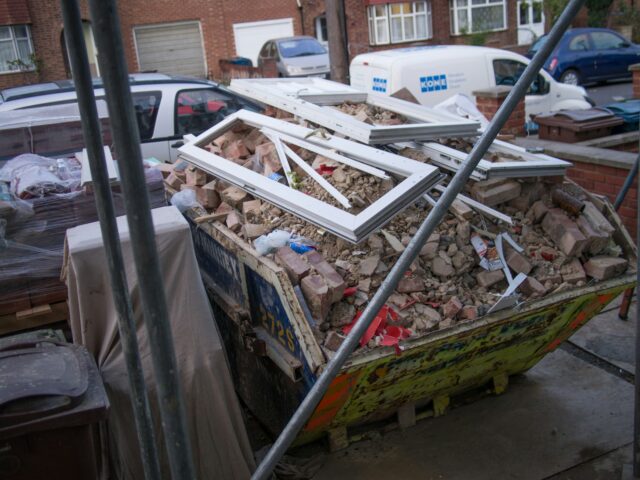
Most homeowners spend months planning a building project – layouts, materials, contractors, budgets – and considerably less time thinking about what happens to the waste it produces. That oversight tends to become obvious somewhere around day four, when the driveway is disappearing under rubble and the builder is asking where the skip is. Getting construction waste removal sorted before work begins is one of the least glamorous but most practically important decisions in any building project.
If you’re managing an extension, renovation or full refurbishment in the area, arranging skip hire in Bushey before the first tool is lifted is one of the simplest ways to keep the project running smoothly from start to finish. This guide covers the full picture – from estimating waste volumes and choosing the right skip size to permits, scheduling and staying legally compliant throughout the build.
Why waste planning matters before the first tool is lifted
Construction waste management is one of those project details that feels straightforward until it isn’t. Volume is the first surprise – a single room strip-out generates more waste than most homeowners expect, and a full extension or renovation multiplies that several times over. The second surprise is variety: different materials arrive at different project phases, some require separate handling and all of it needs to be disposed of lawfully.
There’s also a direct impact on project efficiency. A cluttered site slows trades down, creates trip hazards and makes deliveries of new materials more complicated. Good waste management isn’t just about compliance – it affects how productively the project runs day to day.
What construction waste does a typical Bushey project generate?
Before booking a skip, it’s worth thinking through what the project will actually produce and when. Residential construction waste falls into a few broad categories, and understanding them shapes both skip sizing and collection scheduling.
Inert materials – broken concrete, bricks, hardcore, excavated soil and masonry – dominate the early demolition and groundwork phases. These are heavy, dense and fill a skip quickly relative to their volume. Timber from studwork, joists and formwork follows, alongside plasterboard, insulation offcuts and the packaging from new materials as the build progresses.
A rear extension on a Bushey semi-detached property, for example, will typically generate significant volumes of excavated soil and broken concrete in the groundwork phase, followed by structural timber and plasterboard during the build phase, and mixed finishing waste – tiles, old fittings, packaging – towards completion. Planning for those three distinct waves of waste before work starts prevents the scramble of arranging emergency collections mid-project.
Choosing the right skip size for your project
Skip size selection is where homeowners most commonly either over-spend or under-order. B&K Environmental Services Ltd offers three standard skip sizes for residential projects, each suited to a different scale of work.
8yd skip – for smaller, contained jobs
The 8yd skip handles single-room projects well: a bathroom strip-out, a modest kitchen refit, a garage clearout or a small garden clearance. It’s the right choice when the waste stream is predictable and contained. On tighter Bushey streets or properties with limited driveway space, the smaller footprint is often a practical advantage as much as a cost consideration.
12yd skip – the practical choice for most renovations
For the majority of domestic renovation projects, the 12yd skip is the sensible default. It handles multi-room refurbishments, loft conversions, larger kitchen and bathroom renovations and medium-scale landscaping jobs comfortably – with enough buffer for the unexpected. Renovations almost always produce something unexpected: a wall that conceals old pipework, flooring that hides another layer beneath, a ceiling that needs full replacement rather than a patch repair. The 12yd skip absorbs those surprises without requiring an unplanned second delivery.
16yd skip – for extensions and full-house projects
For full-house clearances, significant extensions or major landscaping projects, the 16yd is the most cost-effective single-container option. Fewer collections mean less disruption to the site and lower overall logistics costs across the project. For very large or continuous waste volumes, B&K also provides roll-on/roll-off containers in 20yd and 40yd sizes.
Timing your collections around the build
This is the detail that separates a well-managed site from a chaotic one. Different build phases produce different waste types and volumes, and treating the whole project as a single waste event leads to either an overfull skip sitting on site for weeks or a series of expensive emergency collections.
The demolition and groundwork phase generates the heaviest, densest waste. This is where load capacity is most likely to be tested and where grab hire is often the more practical option – particularly for soil, hardcore and rubble. A grab lorry arrives, loads directly using a hydraulic arm and departs without leaving a container on site. For Bushey properties with limited street space, that’s a significant advantage.
The mid-build phase shifts to lighter but bulkier materials: timber, plasterboard, insulation and packaging. Collections here need to be timed around deliveries of new materials to avoid congestion. The finishing phase produces smaller volumes of mixed waste that a single well-timed collection usually handles comfortably.
For longer projects, B&K offers rolling collection arrangements with scheduled swaps at agreed intervals. This removes the need to monitor fill levels and chase collections – trades can focus on the work rather than the waste.
Access, permits and placement in Bushey
Bushey covers a varied range of residential street types – from broader roads in Bushey Heath with generous off-street parking to older terraced streets where frontage is limited and parking is competitive. Access planning matters here.
Where a skip can be placed entirely on private property, no permit is required. Where it extends onto the public highway, a permit from Hertsmere Borough Council is needed. Allow at least five to seven working days for processing and confirm requirements for signage and overnight lighting before delivery.
B&K assists customers with permit applications and can advise on whether a permit is required for a specific Bushey address before booking. Always place protective boards under the skip to prevent surface damage, particularly on block paving or newly laid tarmac. And on streets where neighbours share limited parking, a brief note explaining delivery and collection dates prevents the kind of friction that escalates into formal complaints.
When grab hire or wait & load makes more sense
Not every project suits a static skip, and knowing the alternatives before committing to a booking can save both money and time.
Grab hire suits projects generating large volumes of heavy or loose material – soil, hardcore, rubble and green waste. The lorry arrives, loads using a hydraulic grab arm and departs without leaving anything on site. No permit, no overnight footprint, no manual loading. For groundwork phases involving significant excavation, or for garden renovation projects with large amounts of soil to remove, grab hire is often faster and more cost-effective than filling a skip by hand.
Wait & load works differently. B&K’s vehicle arrives at the property, waits while operatives load the waste and then departs immediately. Because no container is left on the highway, no permit is required – making it particularly useful on narrower Bushey streets where on-street skip placement would cause access problems, or for short-term clearances where a static skip would be disproportionate.
Hazardous materials and what cannot go in a skip
Residential construction sites in Bushey – particularly those involving older properties – regularly encounter materials that cannot go into a standard skip. Knowing what they are before work begins avoids compliance issues and potentially serious safety risks.
Asbestos is the most significant concern. Many Bushey properties built before the 1980s contain asbestos in floor tiles, ceiling coatings, pipe lagging or roof materials – sometimes in locations that only become visible once renovation work starts. Asbestos must be removed by licensed contractors and disposed of through licensed channels. It cannot go in a general skip under any circumstances. B&K offers a specialist asbestos removal service and can advise on the correct approach if asbestos is identified during works – do not attempt removal without professional guidance.
Other materials that require separate disposal routes include large batteries, gas cylinders, electrical appliances, medical waste, tyres and hazardous chemicals including fuels, solvents and paints. If there’s any uncertainty about whether a specific material can go in the skip, contact B&K before loading. A brief call is considerably simpler than dealing with a refused collection or a compliance issue mid-project.
Duty of Care and waste transfer notes
Waste disposal carries legal obligations for everyone involved in a residential building project – not just the contractor, but the homeowner commissioning the work.
The Duty of Care requires that waste is handled, transported and disposed of lawfully. In practice, this means using a licensed waste carrier and obtaining a waste transfer note for every collection. The note confirms the type and quantity of waste transferred and where it went. For homeowners, retaining these notes provides protection in the event of a dispute or council inquiry. For contractors and landlords, they’re a legal requirement that must be kept for a minimum of two years.
B&K is a licensed waste carrier, FORS Gold accredited and registered with the Environmental Agency. They provide waste transfer notes for all collections and can advise businesses and contractors on maintaining the documentation needed for compliance audits. Choosing a compliant provider from the outset removes the administrative burden and ensures the paperwork is in order without having to chase it after the project is complete.
Managing contractors and keeping waste under control
On a site with multiple trades working simultaneously – groundworkers, carpenters, electricians, plasterers, tilers – waste management can quickly become a shared problem that nobody actively owns. A brief conversation with the main contractor before work begins, covering what goes in the skip, what doesn’t and when collections are scheduled, prevents the most common on-site waste mistakes.
Agree on waste segregation from the start. Keeping timber separate from plasterboard, and both separate from heavy inert materials, improves recycling rates and can reduce disposal costs. Brief all trades on banned items and make sure the skip provider’s contact number is visible on site in case of queries mid-project.
Schedule collections around the project’s busiest phases rather than reacting to an overfull skip. And if the project is long-running, consider a rolling arrangement with B&K – it removes the logistical overhead and keeps the site consistently clear without requiring constant coordination between the homeowner, contractor and skip provider.
One final point worth making: waste segregation isn’t just good environmental practice – it actively reduces disposal costs. Clean timber, metals and cardboard that are separated from general waste can often be recycled rather than going to landfill, which reduces gate fees and supports the waste hierarchy. On a larger project, those savings add up.