
Concrete can handle considerable compressive loads, but it is much less comfortable dealing with tension. That is where reinforcement comes in. From a house foundation to a large commercial structure, the right steel reinforcement helps concrete manage tensile forces, control cracking, and perform as intended over time.
However, reinforcement is not a one-size-fits-all product. Different forms suit different parts of a structure, and you will often find several types working together on the same project.
This guide looks at the most common reinforcement used in modern construction, where each type is typically used and what to consider when choosing the right option.
What Are the Common Types of Reinforcement Used in Construction?
Reinforcement comes in several forms, from individual bars to ready-made mesh and prefabricated cages. Before looking at each one more closely, here is a quick comparison:
Reinforcement type
What it offers
Common uses
Reinforcing bar
Flexible individual bar layouts
Beams, columns, walls and foundations
Reinforcing mesh
Regular reinforcement over larger areas
Slabs, floors and foundations
Cut-and-bent reinforcement
Bars prepared to specified shapes
Beams, foundations and detailed concrete work
Reinforcement cages
Multiple bars assembled together
Piles, columns, beams and foundations
Links, stirrups and ties
Support around main reinforcement
Beams, columns and cages
1. Reinforcing Bar (Rebar)
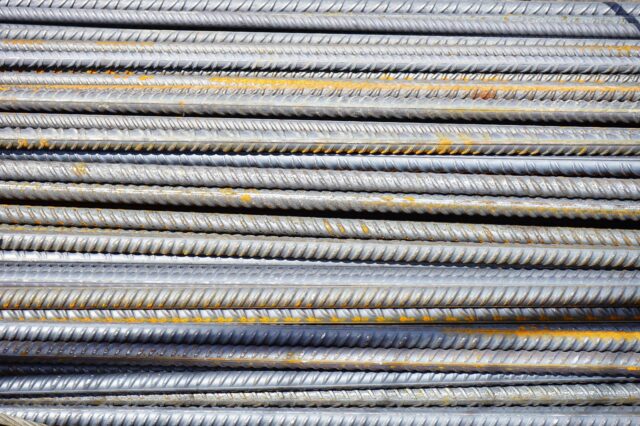
Rebar is probably the reinforcement most people recognise. It consists of individual steel bars positioned inside concrete according to the structural design.
Modern reinforcing bars have a ribbed surface that helps them bond with the surrounding concrete. Different diameters are available, allowing engineers to specify the size and spacing that suit each structural element.
You will commonly find rebar in:
- Foundations and footings
- Beams and columns
- Reinforced concrete walls
- Structural slabs
Its flexibility is one of its biggest advantages. Individual bars can be positioned and shaped to follow the reinforcement arrangement required by the design, making rebar suitable for many different structural applications.
2. Steel Reinforcing Mesh
When reinforcement needs to cover a broad area at regular spacing, reinforcing mesh can make the arrangement much simpler.
Mesh consists of steel wires arranged in a grid and welded at their intersections. Since the spacing is already established, sheets can provide consistent reinforcement across relatively large concrete areas without individual bars having to be positioned one at a time.
You will often see it in:
- Foor slabs
- Foundations
- Broad concrete surfaces.
In the UK, common mesh references include A142, A193, A252 and A393. Those references matter because the wire diameter and amount of steel vary between products. The correct mesh should therefore come from the structural specification rather than being selected simply by appearance.
3. Cut-and-Bent Reinforcement
Not every reinforcing bar can remain straight. Beams, foundations and other concrete elements often require bars with bends, hooks or more detailed shapes.
Cut-and-bent reinforcement is prepared according to the dimensions and shapes on the bar bending schedule. Instead of measuring and forming every bar on site, the reinforcement can arrive prepared for its intended position.
This can be useful because it can:
- Reduce the amount of cutting and bending required on site
- Make complicated bar shapes easier to organise
- Help quantities correspond more closely with the bending schedule
- Save preparation time where many shaped bars are required
4. Prefabricated Reinforcement Cages
Some concrete elements require several reinforcing bars to work together in a fixed arrangement. Rather than assembling every component in its final position, those bars can sometimes be prepared as a reinforcement cage.
A cage brings the main bars, links and other required reinforcement together into an organised framework. Depending on its size and the requirements of the project, it may arrive fully assembled or in sections for completion on site.
Common applications include:
- Piles and pile caps
- Columns and beams
- Foundations
Cages can be particularly practical when similar reinforcement arrangements repeat across a project. Preparing part of the assembly in advance can reduce the amount of steel fixing needed at the final installation position.
5. Links, Stirrups and Ties
The smaller bars around the main reinforcement are easy to overlook, but they have an important structural role.
In beams, links or stirrups wrap around the longitudinal reinforcement and help resist shear forces. Columns use ties around the main vertical bars. These help maintain the required arrangement while also contributing to the reinforcement system.
Because these components are smaller than the main bars, they can sometimes be missed during a material take-off. Their dimensions and quantities should normally appear on the structural drawings or bar bending schedule.
How to Choose the Right Type of Reinforcement
You do not need to guess which reinforcement looks most suitable. The structural design should give you the answer. You simply need to read that information carefully and turn it into the correct order.
Step 1: Start With the Structural Drawings
First, check what the engineer has specified for each concrete element. A slab may use mesh, while nearby beams or columns could require individual bars, links, or cages.
Step 2: Check the Size and Spacing
Next, look at the specified bar diameter or mesh reference. Check the spacing and position as well.
Avoid substituting another bar diameter or changing the spacing simply because it is easier to source. Any structural change should be approved by the responsible designer.
Step 3: Check for Bends and Special Shapes
If the drawings show shaped reinforcement, look for the corresponding bar bending schedule. This gives the supplier the dimensions and quantities needed to cut and bend the steel correctly.
Step 4: Check the Complete Quantity
Finally, make sure your take-off includes more than the obvious main bars. Look for mesh, links, ties, and additional reinforcement around openings or other specified areas.
A quick comparison with the drawings before ordering can prevent a small omission from becoming a problem once work starts.
Source Your Reinforcement With Steel Reinforcement Suppliers
Once you know what the structural design requires, sourcing the different products from one specialist can make the next stage easier.
Steel Reinforcement Suppliers specialises in reinforcing steel for construction projects, supplying reinforcing bars and mesh alongside cut-and-bent steel and prefabricated cages. Bespoke reinforcement can also be prepared around project requirements, with direct-to-site delivery available. This makes it easier to source both standard reinforcement and more detailed fabricated steel through one specialist supplier.
Conclusion
Modern construction uses different forms of reinforcement because each concrete element has its own structural requirements. Rebar offers flexibility, while mesh works well across larger areas. Cut-and-bent bars suit detailed reinforcement shapes, and prefabricated cages bring several components together in a prepared arrangement.
The easiest way to choose between them is to follow the structural specification closely. Check the product type, size, and spacing first, then look for any shaped or additional reinforcement.
Once you understand what each reinforcement type does, reading the drawings and turning them into an accurate order becomes much more straightforward