
Türkiye has stepped up its international climate credentials this month, connecting years of polar scientific research with London’s climate diplomacy scene as the country prepares to host COP31. Two announcements in August, a new book on waste reduction in the Arctic and Antarctic, and a fresh cooperation agreement with London Climate Action Week, together signal an effort to widen the reach of Türkiye’s zero waste programme beyond its borders.
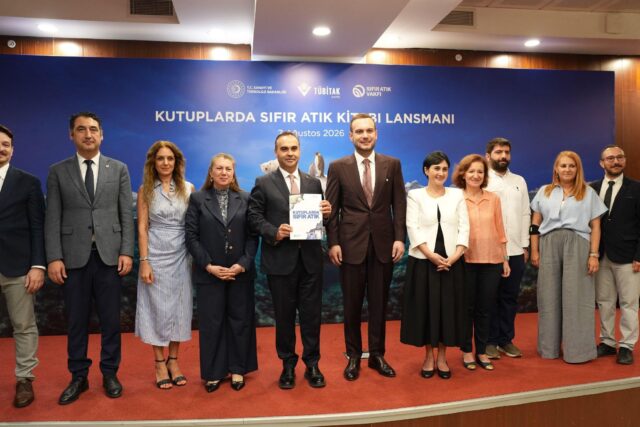
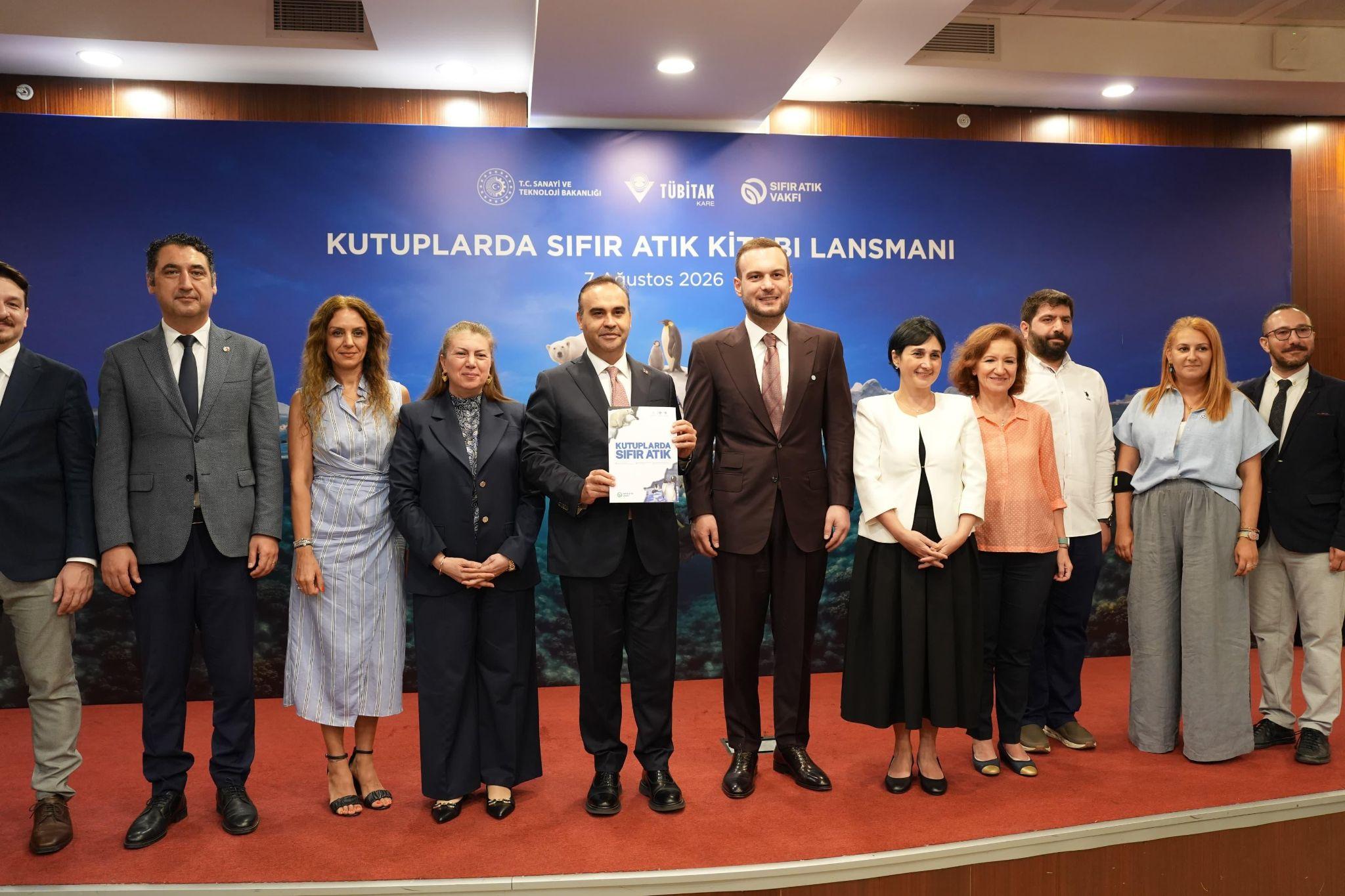
The organisation driving both initiatives is The Zero Waste Foundation, which on 7 August launched “Zero Waste in the Polar Regions”, a book produced with the Polar Research Institute of TÜBİTAK, Türkiye’s Scientific and Technological Research Council. Ten days later, on 17 August, the Foundation signed a cooperation protocol with London Climate Action Week (LCAW) covering climate action, zero waste and circular economy approaches.
A book that joins two national projects
Mehmet Fatih Kacır, Minister of Industry and Technology of Türkiye, said the publication drew together two initiatives that both trace back to 2017. “The Zero Waste initiative launched under the leadership of H.E. Emine Erdoğan has grown step by step from a national initiative into a global one,” he said.
He added: “At the same time, we began organising scientific expeditions to Antarctica and the Arctic under the auspices of the President of the Republic of Türkiye, enabling Turkish scientists to strengthen the country’s presence in polar research. Through this book, these two initiatives have come together.”
The book itself brings together 18 articles written by scientists who have taken part in polar expeditions, covering the scientific, technical, administrative and communication sides of applying zero waste thinking in some of the world’s most remote and fragile environments. It examines climate change, environmental pollution and waste reduction across the Arctic and Antarctic using scientific data gathered on those expeditions.
Rather than focusing only on waste collection once it has already been generated, the publication looks at how scientific activity in the polar regions is planned from the outset, how materials and resources are used, and how energy, water and logistics are managed throughout research missions. The underlying aim, according to the Foundation, is to reduce waste before it occurs, use resources more efficiently and limit the environmental footprint left behind by research work in these areas.
The book frames the polar regions as key indicators of global climate change, arguing that environmental shifts recorded there carry consequences that extend well beyond the Arctic and Antarctic themselves. That framing is intended to give the research relevance to audiences and policymakers far removed from the poles. The study is also described as an extension of the wider zero waste vision championed by H.E. Emine Erdoğan, who founded the Zero Waste Movement, chairs the UN High-Level Advisory Board on Zero Waste, and serves as Honorary President of the Zero Waste Foundation.
New protocol ties Türkiye’s work to London’s climate network
The second development came with the signing of a cooperation protocol between the Zero Waste Foundation and London Climate Action Week. The agreement is designed to build an institutional partnership between the two bodies, with the stated goals of strengthening knowledge exchange, encouraging joint initiatives and deepening international dialogue on zero waste and the circular economy.
The protocol was signed by Samed Ağırbaş, President of the Zero Waste Foundation and COP31 High-Level Climate Champion, together with Climate Action Founder and CEO Nick Henry. Speaking after the signing, Ağırbaş said: “After this cooperation protocol, I hope we will carry out strong work and organize joint events at COP31 and London Climate Action Week.”
London Climate Action Week describes itself as bringing together participants from government, cities, business, finance, academia, civil society and local communities. By securing an agreement with LCAW, the Zero Waste Foundation gains a direct route into that London-based international climate network, giving Türkiye’s zero waste and circular economy work a more prominent international platform.
COP31 sets the backdrop for wider cooperation
Both developments arrive as Türkiye prepares to host COP31, which provides a broader diplomatic context for the new partnership even though the immediate focus is on practical exchange between the Foundation and the LCAW network. Officials involved in the agreement have pointed to the possibility of joint events at both COP31 and future editions of London Climate Action Week, building on the cooperation protocol signed in August.
Taken together, the polar research book and the London agreement illustrate an approach that treats zero waste as more than a matter of recycling or waste management. By linking scientific research, resource efficiency and circular economy principles to an international climate action network, the Foundation is positioning Türkiye’s zero waste experience, built up since 2017, as a contribution to global climate discussions rather than a purely domestic policy. Whether that translates into concrete joint programming will likely become clearer as COP31 and future London Climate Action Week events approach, but for now the book and the protocol mark two tangible steps in that direction, connecting research carried out in some of the planet’s most remote regions with policy conversations taking place in one of its most connected cities.